


At first glance, CLV and CGF systems can look similar. Both are concentric air-flue systems. Both are designed to supply combustion air and remove combustion products. Both can be relevant in new construction and renovation projects, especially when the heating appliance is room-sealed and independent from indoor air.
But they are not the same system.
The key question is not “Which one is better?” The right question is: which system matches the appliance?
CLV and CGF are designed for different applications, different operating conditions, and different types of heating equipment. CLV is a concentric air-flue system for room-sealed gas or oil heating appliances with forced draught. CGF is a dedicated concentric air-flue system for room-sealed gas fireplaces.
Choosing between them is not about appearance, pipe shape, or diameter alone. It is about appliance type, fuel, draught class, temperature class, installation route, and the manufacturer’s documentation.
In this guide, we explain the difference between CLV and CGF concentric chimney systems, where each system is typically used, and what homeowners, installers, and project planners should check before choosing one.
What Is a Concentric Air-Flue System?
A concentric air-flue system combines two functions in one coordinated route: combustion air supply and flue gas exhaust.
In many modern heating appliances, combustion air does not come from the room. Instead, the appliance is room-sealed, meaning it takes the air it needs for combustion through a dedicated air path. At the same time, combustion products must be safely removed to the outside.
A concentric system helps compactly manage both functions. In simple terms, one part of the system carries combustion products away from the appliance, while the surrounding air path supplies fresh combustion air to the appliance.
This type of system is especially useful when:
- the heating unit is airtight;
- the building is airtight or energy efficient;
- combustion air should not be taken from the living space;
- a compact air and flue gas solution is required;
- an existing brick or concrete chimney channel can be reused;
- the project needs a clear and coordinated component system.
However, “concentric” does not automatically mean “universal.” Different appliances require different system types, pressure classes, temperature ratings, terminals, routes, and components. That is why CLV and CGF should be selected according to the appliance and project conditions, not treated as interchangeable products.
CLV Concentric Air-Flue System at a Glance
CLV is a concentric air-flue system designed for room-sealed heating appliances that require combustion air supply and forced flue gas exhaust as one coordinated system.
It is intended for appliances using gas or oil fuel and is especially relevant when the heating appliance operates with forced draught. This makes CLV a practical choice for technical heating installations where air supply and combustion product removal need to be planned together.
The CLV system can be used inside the building or installed into existing brick or concrete flue gas channels. This makes it useful not only for new builds, but also for renovation projects where an existing chimney shaft or channel can become part of the new system layout.
Important CLV characteristics include:
- designed for combustion air supply and flue gas exhaust;
- intended for room-sealed heating appliances;
- suitable for gas or oil fuel applications;
- P1 pressure class for forced draught systems;
- working temperature up to 200 °C;
- suitable for wet operating conditions;
- inner pipe made from stainless steel 1.4404;
- outer pipe made from stainless steel;
- can be installed inside the building or into existing brick or concrete channels;
- designed as a coordinated system with matching components.
CLV is not simply a pipe. It is a system logic. Its value comes from combining combustion air supply, forced exhaust, stainless steel construction, and a practical component range that helps installers form a clear and reliable route.
CGF Concentric Air-Flue System at a Glance
CGF is a dedicated concentric air-flue system for room-sealed gas fireplaces. It is designed to supply combustion air to the fireplace and remove combustion products to the atmosphere.
This is the most important point: CGF is not a general-purpose system for every gas or oil appliance. It is developed specifically for gas fireplace applications.
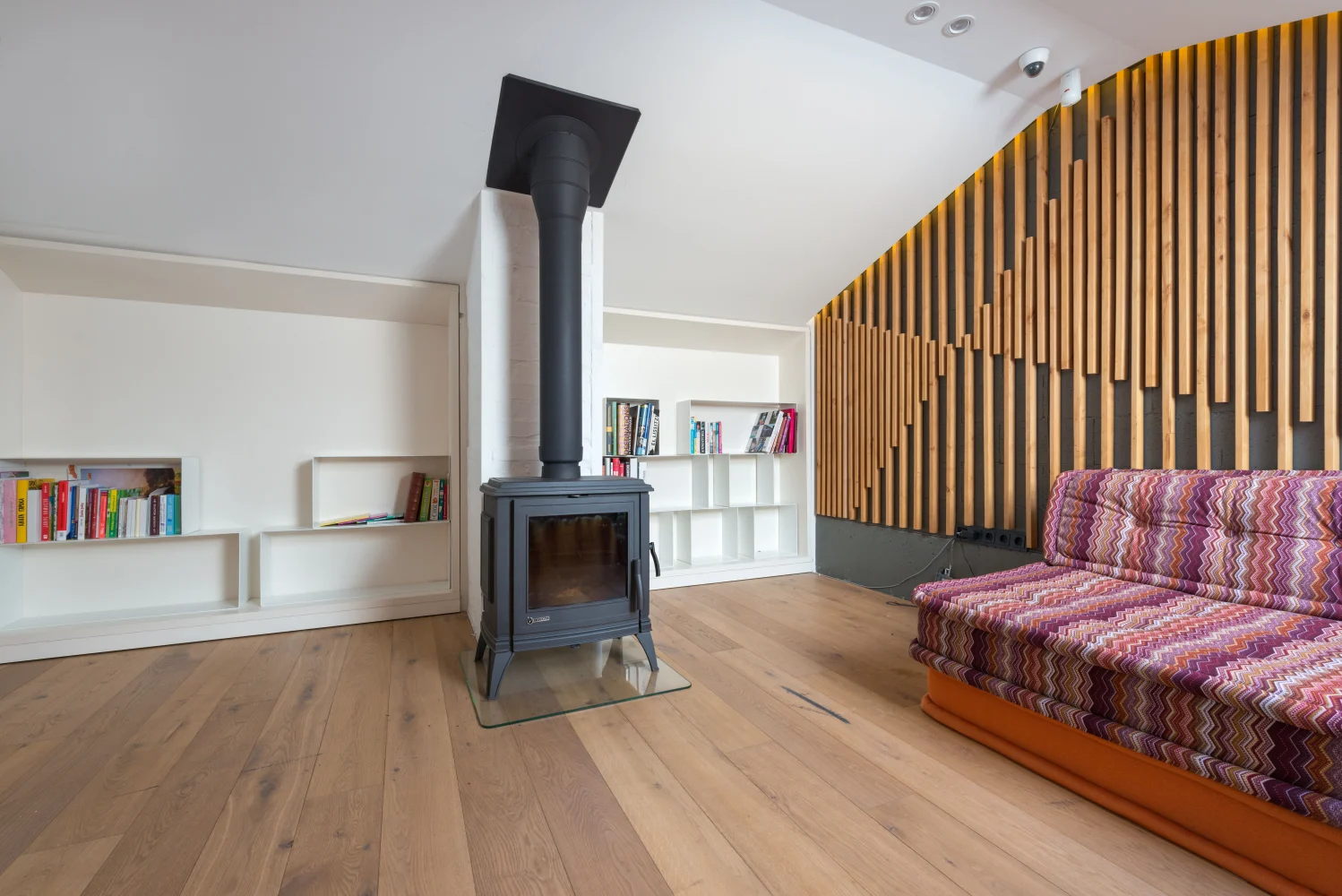
Because gas fireplaces are often installed in living spaces, the system must support more than technical performance. The connection, routing, terminal, and final appearance can all matter. A fireplace is usually part of the interior, not hidden away in a plant room. That makes correct system selection especially important.
Important CGF characteristics include:
- designed for room-sealed gas fireplaces;
- intended for gas fuel;
- N1 pressure class for natural draught;
- working temperature up to 600 °C;
- suitable for wet operating conditions;
- inner pipe made from stainless steel 1.4404;
- outer pipe made from stainless steel or painted stainless steel;
- wall thickness of 0.5 mm;
- can be installed inside the building or into existing brick or concrete chimney channels;
- includes practical components for fireplace connection, routing, inspection, condensate handling, and termination.
CGF is most relevant when a project involves a gas fireplace that requires a dedicated air-flue solution. It helps create a technically consistent and visually cleaner installation when the fireplace, flue route, and surrounding interior need to work together.
CLV vs CGF: Side-by-Side Comparison
CLV and CGF share the same broad idea: they are concentric systems that combine air supply and flue gas exhaust. The real difference is not the shape of the pipe. The real difference is the appliance and operating conditions behind the system.
CLV is built around room-sealed gas or oil heating appliances with forced draught. CGF is built around room-sealed gas fireplaces working under natural draught conditions.
| Aspect | CLV | CGF |
| Main purpose | Combustion air supply and forced flue gas exhaust for room-sealed heating appliances | Combustion air supply and flue gas exhaust for room-sealed gas fireplaces |
| Appliance type | Room-sealed gas or oil heating appliances | Room-sealed gas fireplaces |
| Fuel type | Gas or oil | Gas |
| Draught / pressure class | P1, forced draught | N1, natural draught |
| Temperature class | T200, up to 200 °C | T600, up to 600 °C |
| Operating condition | Wet | Wet |
| Inner pipe material | Stainless steel EN 1.4404 | Stainless steel EN 1.4404 |
| Outer pipe material | Stainless steel | Stainless steel or painted stainless steel |
| Installation location | Inside the building or existing brick/concrete flue channels | Inside the building or existing brick/concrete flue channels |
| Best fit | Technical heating appliance projects, boiler-type systems, forced-draught installations | Gas fireplace projects, especially where a dedicated fireplace system is required |
| Main selection question | Does the room-sealed appliance require a CLV-type forced air-flue system? | Is the appliance a room-sealed gas fireplace requiring a CGF-type air-flue system? |
Appliance Type Is the Main Difference
The most important difference between CLV and CGF is the appliance they are designed for.
CLV is used for room-sealed gas or oil heating appliances. These are often technical heating systems where the main priority is a compact, coordinated solution for combustion air supply and forced flue gas exhaust.
CGF is used for room-sealed gas fireplaces. The system is designed around the needs of gas fireplace installations, where the appliance type, connection geometry, terminal options, and final appearance may all influence the project.
This means CLV and CGF should not be chosen just because they look similar or because the diameter appears close. The appliance decides the system, not the other way around.
Before choosing between CLV and CGF, the first question should always be:
What appliance will this system connect to?
If the answer is a room-sealed gas or oil heating appliance, CLV may be the relevant system to review. If the answer is a room-sealed gas fireplace, CGF is the system designed specifically for that application.
P1 vs N1: Forced Draught and Natural Draught
The second major difference is draught and pressure class.
CLV is P1 system, which means it is associated with forced draught operation. In practice, this makes CLV relevant for appliances that require a forced air-flue solution. This has to be checked against the appliance documentation and installation requirements.
CGF is N1 system, which means it is associated with natural draught. It is designed for gas fireplace applications where the system and appliance are selected for that operating mode.
This is not a quality ranking. P1 is not “better” than N1, and N1 is not “worse” than P1. They describe different operating conditions.
The problem starts when someone treats these classes as interchangeable. A system that looks similar on site may behave very differently when connected to the wrong appliance. That is why draught class must be checked before components are ordered or installed.
T200 vs T600: Why Temperature Class Matters
The third major difference is temperature class.
CLV is rated up to 200 °C. CGF is rated up to 600 °C.
At first glance, it may be tempting to assume that the higher temperature class is automatically “better.” That is not the right way to think about it.
Temperature class is not a ranking. It is a compatibility requirement.
A system should be selected because its temperature class, pressure class, material, condensate resistance, and application match the appliance. CGF has a higher temperature class because it is designed for a different application and operating range. CLV has a lower temperature class because it is designed around a different type of room-sealed heating appliance and forced draught operation.
The correct system is the one that matches the appliance, not the one with the highest number in the designation.
Installation and Renovation Use Cases
Both CLV and CGF can be relevant in new construction and renovation projects. Both can be installed inside the building. Both can also be integrated into existing brick or concrete chimney channels when the project conditions allow it.
This is useful because many renovation projects already have a masonry chimney or flue channel available. Instead of removing everything and starting from zero, the existing channel may be used as part of a new, more coordinated air-flue solution.
However, the presence of an existing chimney channel does not decide whether CLV or CGF should be used. The appliance does.
For example:
- A room-sealed gas or oil heating appliance in a technical room may point the project toward CLV, if the appliance documentation requires that type of forced air-flue system.
- A room-sealed gas fireplace in a living room may point the project toward CGF, because CGF is designed specifically for gas fireplace applications.
- A renovation with an existing brick or concrete chimney channel may allow either type of system in principle, but the final choice still depends on the appliance, the route, the available dimensions, and installation rules.
- A project with a complex route may require careful selection of elbows, tees, inspection elements, supports, terminals, and connection parts.
Component availability matters because a chimney or air-flue route is rarely just one straight pipe. Real projects may require direction changes, inspection access, condensate handling, appliance adapters, supports, or special terminals. The more clearly the system is planned, the less likely it is that installers will need to improvise on site.
This is especially important in renovation work, where existing channels may be narrow, offset, damaged, or difficult to access. A technically suitable system still has to be practical to install and service.
Common Mistakes When Choosing Between CLV and CGF
Choosing between CLV and CGF is usually straightforward when the appliance documentation is clear. Problems appear when the system is selected too late, too quickly, or based on incomplete information.
Mistake 1. Treating CLV and CGF as Interchangeable
CLV and CGF are both concentric systems, but they are not the same product category in practical use.
CLV is designed for room-sealed gas or oil heating appliances with forced draught. CGF is designed for room-sealed gas fireplaces. If the wrong system is selected, the issue is not only technical accuracy. It can affect appliance performance, installation approval, maintenance, and long-term reliability.
A similar pipe layout does not mean the systems can be swapped.
Mistake 2. Choosing by Diameter Only
Diameter is important, but it is only one part of system selection.
A homeowner or installer may see similar dimensions and assume the system is suitable. That can be a serious mistake. The correct system also depends on fuel type, draught class, temperature class, condensate resistance, route, terminals, appliance documentation, and national requirements.
A pipe that fits physically may still be wrong technically.
Mistake 3. Ignoring Appliance Documentation
The appliance manual should be one of the first documents checked.
Room-sealed heating appliances and gas fireplaces usually have specific requirements for air supply, flue gas exhaust, permitted routes, maximum lengths, terminal positions, connection geometry, and compatible system types.
If those requirements are ignored, the installation may look complete but fail to meet the actual appliance requirements. That can lead to poor performance, inspection issues, or the need for rework.
The safest approach is simple: start with the appliance, then select the system.
Mistake 4. Forgetting Existing Chimney Limitations
Existing brick or concrete channels can be useful in renovation projects, but they are not automatically suitable.
Before using an existing channel, the installer should check its condition, dimensions, route, access, moisture exposure, and relationship to combustible materials. The route also has to work with the chosen system components.
A masonry channel may make the project easier, but it does not remove the need for proper system selection and inspection.
Mistake 5: Letting Aesthetics Override Technical Compatibility
This mistake is especially common in gas fireplace projects.
A gas fireplace is often placed in a living room, open-plan space, or feature wall. Naturally, homeowners care about how the final installation looks. That is valid. But appearance cannot replace technical compatibility.
CGF can support a cleaner and more fireplace-focused solution, but it still has to match the gas fireplace model, route, terminal, operating conditions, and installation rules. A good installation should be both technically correct and visually planned.
How Vilpra Industries Supports Correct System Selection
At Vilpra Industries, CLV and CGF are not treated as competing systems. They are different solutions for different appliance types and operating conditions.
That distinction matters. A manufacturer’s role is not only to provide components, but to help installers and project planners understand how those components fit into a complete smoke exhaust and air supply route.
Vilpra’s wider product range includes stainless steel chimney systems, concentric air-flue systems, flue liners, connecting flue pipes, , terminals, supports, brackets, flashings, and other system elements. This makes it possible to plan the route as a complete system instead of combining unrelated parts at the end of the project.
CLV and CGF projects, good planning means checking:
- appliance type;
- fuel type;
- draught or pressure class;
- temperature class;
- wet or dry operating conditions;
- required route;
- available chimney or shaft dimensions;
- component compatibility;
- inspection and maintenance access;
- terminal and connection requirements.
Vilpra also supports the technical side of system planning with documentation, product data, and manufacturing experience in stainless steel chimney systems. The final suitability of any system should still be confirmed according to the heating appliance manufacturer’s documentation, the chimney installation guide, and national legal requirements.
In other words, the goal is not just to choose a product. The goal is to choose the right system for the right appliance.
Practical Checklist Before Choosing CLV or CGF
Before choosing between CLV and CGF concentric chimney systems, homeowners, installers, and project planners should ask the following questions:
- What appliance will be connected?
- Is it a gas fireplace or another room-sealed heating appliance?
- What fuel does the appliance use?
- Does the appliance require forced draught or natural draught?
- What temperature class is required?
- Will the system operate in wet conditions?
- Will it be installed inside the building or inside an existing masonry channel?
- What route does the system need to follow?
- Are elbows, tees, inspection elements, terminals, or supports required?
- Are distances to combustible materials clearly defined?
- Has the appliance manual been checked?
- Has a qualified installer confirmed compatibility?
- Does the selected system match local installation rules?
- Will the system be accessible for future inspection or maintenance?
This checklist helps prevent one of the most common selection errors: choosing the system too late. CLV or CGF should be considered early in the project, together with the appliance, the route, and the chimney or shaft conditions.
Frequently Asked Questions
CLV is a concentric air-flue system for room-sealed gas or oil heating appliances with forced draught. CGF is a dedicated concentric air-flue system for room-sealed gas fireplaces.
The systems may look similar because both are concentric, but they are designed for different appliances and operating conditions. They should not be treated as interchangeable.
No. CLV and CGF are not automatically interchangeable.
The correct choice depends on appliance type, fuel, draught class, temperature class, installation route, and the appliance manufacturer’s documentation. A similar diameter or pipe layout is not enough to confirm compatibility.
A concentric air-flue system combines combustion air supply and flue gas exhaust in one coordinated system. It is commonly used with room-sealed appliances that do not take combustion air directly from the room.
This type of system can be useful in airtight buildings, modern heating installations, and renovation projects where a compact air and flue gas solution is needed.
CLV should be considered when the project involves a room-sealed gas or oil heating appliance that requires a forced air-flue system. It is especially relevant for technical heating appliance projects where combustion air supply and forced exhaust need to be planned together.
The final decision should always be based on the heating appliance documentation, installation guide, and national requirements.
CGF should be considered when the project involves a room-sealed gas fireplace. It is designed specifically for gas fireplace applications where combustion air supply, flue gas exhaust, routing, connection geometry, and final appearance all matter.
This makes CGF especially relevant for living room fireplace projects and renovation work involving gas fireplace installations.
P1 refers to the pressure class associated with forced draught operation. In the context of CLV, it means the system is intended for appliances and installations that require a forced draught air-flue solution.
This is one of the key reasons CLV should be selected according to the appliance requirements, not by appearance or diameter alone.
N1 refers to natural draught operation. In the context of CGF, it describes the operating class of the system used for room-sealed gas fireplaces.
N1 is not a lower-quality option than P1. It simply describes a different operating condition and must match the appliance and installation design.
CGF is rated up to 600 °C, while CLV is rated up to 200 °C. This difference reflects their different intended applications and operating ranges.
A higher temperature class does not automatically make CGF the better or more universal system. The correct system is the one that matches the appliance and its documentation.
Yes, both CLV and CGF can be relevant in projects involving existing brick or concrete chimney channels, provided the channel and installation conditions are suitable. This can be especially useful in renovation projects.
However, the existing channel does not decide the system by itself. The appliance, route, dimensions, required components, and local requirements still have to be checked.
A qualified professional should confirm which system is suitable. The decision should be based on the appliance documentation, fuel type, draught class, temperature requirements, chimney route, system designation, and local regulations.
Manufacturers such as Vilpra Industries can support installers with product information and technical documentation, but the final installation must be planned and completed according to the full project requirements.
Conclusion
CLV and CGF may look similar because both are concentric air-flue systems. But they are not competing versions of the same product. They are different systems designed for different appliances and operating conditions.
CLV is used for room-sealed gas or oil heating appliances where combustion air supply and forced flue gas exhaust must work together. CGF is designed specifically for room-sealed gas fireplaces, where the appliance type, route, connection, and final installation result all matter.
The choice should never be made by pipe diameter, appearance, or assumption alone. It should be based on the appliance, fuel type, draught class, temperature class, operating conditions, installation route, and manufacturer’s documentation.
At Vilpra Industries, the practical advice is simple: start with the appliance, then choose the system. When CLV and CGF are selected for the right applications, they help create safer, more reliable, and more technically consistent air-flue solutions.
A good concentric chimney system is not just about moving air and combustion products. It is about matching the right system to the right appliance from the very beginning.


